
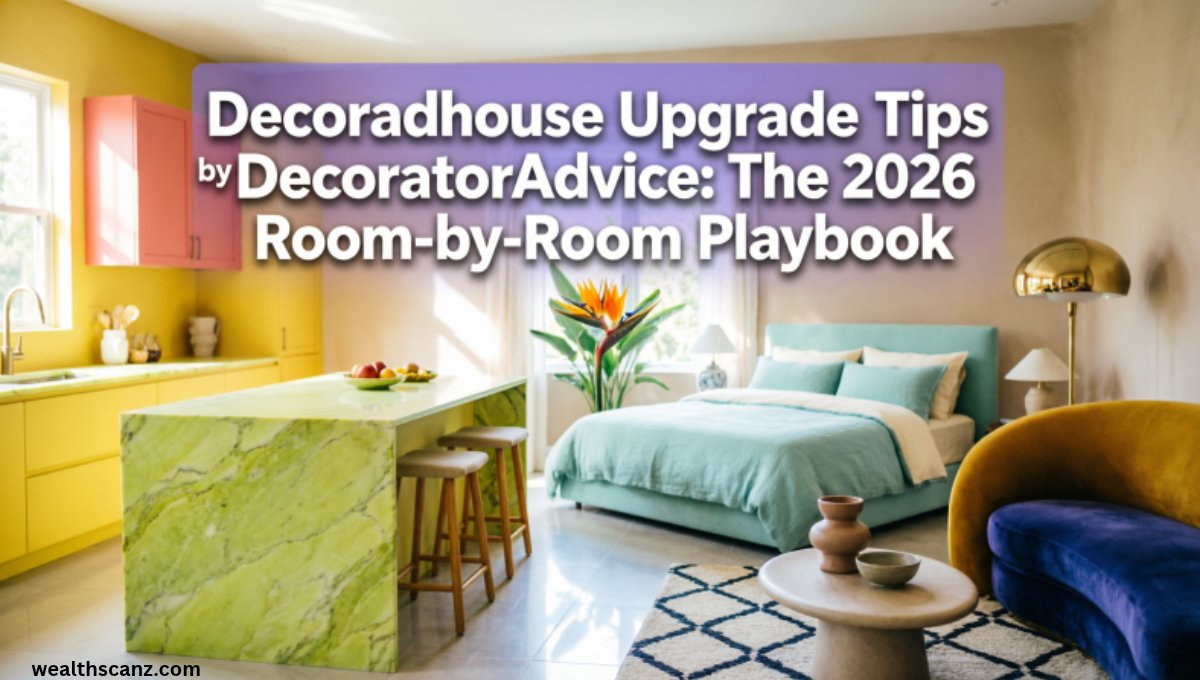
Your home is losing value right now,and you haven’t noticed. This October 2026, homeowners are ditching five-figure renovations for cheaper, smarter moves. The decoradhouse upgrade tips by decoratoradvice trend is exploding because small changes beat big budgets. You don’t need a contractor,you need a plan.
The best decoration tips decoradhouse from decoratoradvice focus on layered lighting, one bold paint choice, and storage that works. Decoradhouse renovation tips from decoratoradvice skip demolition entirely,fix what frustrates you first, decorate second. That’s why upgrades decoradhouse done in one weekend often outperform full remodels. The smartest decor tips decoradhouse cost less than dinner out.
Keep scrolling and nothing changes. Read on and your home starts improving this weekend.
Quick Facts at a Glance:
| Factor | Details |
| Core Philosophy | High-impact, low-cost upgrades over full renovations |
| Average Cost Per Room | $50 – $500 |
| Skill Level | Beginner-friendly (mostly DIY) |
| Time Per Project | 2 hours – 1 weekend |
| Best Starting Point | Lighting + paint + decluttering |
Start With a Clear Home Upgrade Plan
Walking through your home with a notepad beats scrolling mood boards when you don’t know where to begin. List what actually bothers you,the dark hallway, the crowded kitchen counter, the bedroom that never feels restful. Then separate must-fix problems from cosmetic wishes.
A leaking faucet or damaged flooring comes before a new accent chair. That order protects your budget and stops you from decorating around unresolved problems. Home upgrade ideas work best when function leads and style follows.
Here’s the priority order that keeps every project on track:
- Structural fixes first , walls, flooring, electrical, leaks
- Functional upgrades second , storage, lighting, layout
- Cosmetic changes last , paint, décor, accessories
Refresh Walls With the Right Colors
Paint remains the cheapest dramatic change you can make, but color choices fail when they ignore the room’s light. Warm whites and soft greiges work as foundations, while one deeper shade on a single wall adds depth without overwhelming the space.
Test swatches on the actual wall at morning and evening. A beige that looks perfect at noon turns gray and cold after sunset. That single step prevents the most common paint regret.
Color Palette Ideas by Room:
| Room | Best Foundation | Accent Option |
| Living Room | Warm white, greige | Deep green, navy |
| Bedroom | Soft gray, cream | Dusty blue, sage |
| Kitchen | Muted earth tones | Terracotta, olive |
| Bathroom | Bright white | Soft sage |
Improve Lighting for a More Modern Interior
Most rooms rely on one overhead fixture that flattens everything. Layered lighting fixes that by combining ambient, task, and accent sources so the room adapts to how you actually use it. Lighting upgrades deliver more daily impact than most furniture purchases.
Ambient light fills the space. Task lighting handles reading, cooking, and working. Accent lighting highlights what deserves attention,a shelf, a plant, a piece of art.
The three layers work like this:
- Ambient , ceiling fixtures, recessed lights, flush mounts
- Task , under-cabinet strips, desk lamps, bedside reading lights
- Accent , picture lights, LED strips, small spotlights
Ambient, Task, and Accent: The Three Layers That Matter
Ambient comes from ceiling fixtures or recessed lights. Task belongs where you work,under cabinets, beside a chair, above a desk. Accent is the decorative layer most people skip entirely.
Start with ambient and task. Add accent when the basics feel right. Highlighting a backsplash while chopping vegetables in shadows defeats the purpose.
Upgrade the Living Room Without Replacing Everything
The living room carries the most daily traffic, which makes comfort the priority over trends. Rearranging furniture costs nothing and often solves the “something feels off” problem better than a new sofa. A living room makeover starts with placement, not purchases.
Pull seating away from walls and create a conversation zone around a rug. Mix textures through throws and cushions,velvet against linen, wool against wood.
Quick refresh moves that cost little:
- Rearrange furniture into a conversation layout , free
- Add textured cushions and throws , 40–80
- Anchor the space with a well-sized rug , 60–150
- Place a floor lamp in the darkest corner , 40–80
Also Read About: DecoratorAdvice.com About: Your Practical Guide to a Home You’ll Love in 2026
Create a Functional and Stylish Kitchen
Kitchen upgrades that matter rarely involve ripping out cabinets. Swapping dated hardware for matte black or brushed brass pulls refreshes the entire room for under $50. Battery-powered LED strips under upper cabinets improve visibility without an electrician.
Clear the worktops. Excessive clutter makes even a beautiful kitchen look untidy. Store infrequently used appliances and keep daily essentials within reach.
Kitchen Upgrade Ideas:
| Upgrade | Estimated Cost | Difficulty |
| Cabinet hardware swap | 30–60 | Easy |
| Under-cabinet LED strips | 20–40 | Easy |
| Peel-and-stick backsplash | 40–100 | Easy–Moderate |
| Drawer organizers | 15–30 | Easy |
Make the Bedroom More Comfortable
Bedrooms fail when they prioritize style over rest. Start with bedding,it’s the largest visual element and the one you touch every night. Neutral tones with layered textures create calm without requiring new furniture.
Add blackout curtains for better sleep and two matching bedside lamps for symmetry. Under-bed storage handles the clutter that makes bedrooms feel stressful rather than restorative.
Bedroom Decor Ideas That Work:
| Upgrade | Cost | Why It Works |
| Layered bedding | 100–250 | Biggest visual element |
| Blackout curtains | 40–100 | Better sleep quality |
| Matching bedside lamps | 50–120 | Creates symmetry |
| Under-bed storage bins | 20–50 | Hides clutter |
Upgrade Bathrooms With Practical Details
Bathrooms reward detail work more than major overhauls. A new faucet, a framed mirror replacing builder-grade glass, and fresh caulk around edges read as a renovation to anyone walking in.
Address ventilation and moisture problems before decorative changes. Once the functional issues are resolved, coordinated towels and a large mirror can make a compact bathroom feel intentional.
Work through these details in order:
- Re-caulk edges and seals , 10–20
- Replace the faucet , 60–150
- Swap builder-grade mirror for a framed one , 50–120
- Coordinate towel hardware and textiles , 30–60
Use Smart Storage to Reduce Clutter
Storage isn’t about buying more bins. It’s about giving every object a home so surfaces stay clear. Vertical shelving uses wall space that otherwise goes to waste, especially in smaller rooms. Small space decorating lives or dies on this principle.
Closed cabinets hide the ugly. Open shelves display what deserves attention. Before purchasing anything new, remove what you don’t use,that alone often creates more space than another trip to the container store.
Follow these storage rules:
- Go vertical , use wall space, not floor space
- Hide the ugly, display the beautiful , closed storage for clutter, open for décor
- Choose multi-purpose furniture , ottomans with storage, beds with drawers
- Declutter before buying , remove first, purchase second
Add Natural Elements to Your Interior
Plants bring life to corners that feel dead, and they cost less than most decorative accessories. A snake plant or pothos survives neglect and adds color without paint.
Wooden finishes, woven baskets, and natural fabrics create warmth that synthetic materials can’t match. One well-placed plant beats five forgotten decorative objects.
Easy natural additions worth trying:
- Snake plant or pothos on a shelf , 15–25
- Woven baskets in the entryway , 20–50
- Wooden accents on tables and shelves , 30–80
- Natural fabric throws on sofa or bed , 25–60
Upgrade Flooring and Textures
Full flooring replacement rarely fits a realistic budget. Professional cleaning and refinishing can revive what’s already there, and a properly sized area rug covers problem zones while anchoring furniture.
Textures add the depth that hard surfaces alone can’t provide. Combine smooth furniture with woven rugs and soft curtains. A room of only hard materials feels cold regardless of how expensive the pieces are.
Texture Layering Guide:
| Texture Type | Examples | Where to Use |
| Smooth | Leather, glass, metal | Furniture frames |
| Soft | Velvet, linen, cotton | Cushions, curtains |
| Woven | Jute, rattan, wool | Rugs, baskets |
| Natural | Wood, stone | Tables, accents |
Choose Décor With a Consistent Style
Buying attractive items individually without a plan creates rooms that feel disconnected. Pick a direction before purchasing accessories,modern, traditional, rustic, or transitional,and let colors and materials connect the pieces. Modern home decor trends shift yearly, but consistency never dates.
Consistency doesn’t mean everything matches perfectly. It means the proportions, finishes, and tones relate to each other. Negative space matters too; every surface doesn’t need filling.
Style Direction Cheat Sheet:
| Style | Key Materials | Color Range |
| Modern Minimalist | Metal, glass, smooth wood | White, gray, black |
| Traditional | Wood, brass, fabric | Warm neutrals, deep tones |
| Rustic | Reclaimed wood, stone | Earth tones, browns |
| Transitional | Mixed finishes | Neutral with accent color |
Focus on Quality Instead of Excess
A room doesn’t become more sophisticated by containing more things. Fewer pieces with strong visual appeal and practical value outperform a crowded space every time. Expert decorator advice repeats this constantly because it works.
Before buying anything, ask where it will go, how often it will be used, and whether it solves a real problem. Durable materials cost more upfront but beat replacing cheap items repeatedly.
Ask these four questions before any purchase:
- Does it solve a real problem?
- Does it fit the existing style?
- Will it last five years or more?
- Do I already have a place for it?
Also Read About: Deshoptec Com Uncovered: What You Need to Know in 2026
Use a Room-by-Room Upgrade Strategy
Trying to upgrade an entire home at once drains budgets and energy. Pick the room that impacts daily life most and finish it before moving on. That sequence makes progress visible and prevents half-finished projects everywhere.
The order stays consistent: declutter, repair, paint, lighting, furniture arrangement, storage, then final décor. Following the same process across rooms creates a home that feels cohesive rather than patched together.
The seven-step sequence for every room:
- Declutter first , clears the path for everything else
- Repair next , fix before decorating
- Paint the walls , sets the visual foundation
- Upgrade lighting , defines how the room feels
- Arrange furniture , establishes function
- Add storage , keeps surfaces clear
- Finish with décor , adds personality last
Start With Light: The Upgrade Most Homes Desperately Need
If you only change one thing this month, change the bulbs. Warm-toned LEDs between 2700K and 3000K transform how a room feels for under $20. Harsh daylight bulbs make even expensive furniture look clinical.
Then add dimmers to overhead fixtures. Being able to shift from bright cleaning light to soft evening glow costs less than $25 per switch and delivers more daily impact than most furniture purchases.
Bulb Temperature Guide:
| Kelvin Range | Light Tone | Best For |
| 2700K | Warm white | Living rooms, bedrooms |
| 3000K | Soft white | Kitchens, bathrooms |
| 4000K | Cool white | Home offices, task areas |
| 5000K+ | Daylight | Avoid in living spaces |
Paint, Color, and the Power of One Bold Wall
Neutral foundations let furniture and décor do the talking. But one deep green, navy, or terracotta wall behind a bed or sofa adds instant depth that all-neutral rooms lack.
The accent wall strategy works because it’s controlled. You’re not committing the whole room to a bold choice,just one surface that creates a focal point. A gallon of paint covers most accent walls, making this the cheapest dramatic transformation available.
Accent Wall Ideas by Space:
| Room | Suggested Accent Color | Where to Place It |
| Bedroom | Deep green or navy | Behind headboard |
| Living Room | Terracotta or charcoal | Behind sofa |
| Dining Room | Dusty blue | Behind dining table |
| Home Office | Soft black | Behind desk |
Smart Storage: The Secret Behind Every Clutter-Free Home
Clutter accumulates because objects lack designated homes. Baskets, shelves, and multi-purpose furniture solve that problem when chosen with intention rather than bought in a panic.
Vertical storage is the most underused solution. Tall bookcases and wall-mounted shelves use space that otherwise sits empty. A storage bench in the entryway holds shoes, provides seating, and anchors the space,three jobs from one piece.
These solutions earn their footprint twice:
- Storage bench in the entryway , seating plus shoe storage
- Tall bookcase in living room or office , vertical display
- Over-door organizer in bedroom or bathroom , hidden storage
- Ottoman with storage in living room , seating plus blanket storage
FREQUENTLY ASKED QUESTIONS
What are decoradhouse upgrade tips by decoratoradvice?
They are budget-friendly, step-by-step home improvement strategies covering lighting, paint, storage, and décor that refresh rooms for 50–500 without professional help.
What is the cheapest home upgrade with the biggest impact?
Paint delivers the cheapest high-impact result,a single accent wall costs 30–50 and transforms a room instantly, while rearranging furniture costs nothing at all.
How can I upgrade my living room on a tight budget?
Start with free changes like furniture rearrangement and decluttering, then add a floor lamp, textured throw, and indoor plants for under $150 total.
Are DIY home improvements worth it for beginners?
Yes,painting, hardware swaps, shelving, and décor projects are beginner-safe and deliver professional-looking results, while electrical, plumbing, and structural work should go to professionals.
What is the best order to follow when upgrading a room?
Follow this sequence: declutter first, then lighting, then paint, then furniture placement, and finally decorative accessories,function before atmosphere before personality.
CONCLUSION
The decoradhouse upgrade tips by decoratoradvice approach proves that thoughtful layering beats expensive renovation every time. Start with lighting and paint,the two cheapest changes with the highest daily impact. Then declutter, fix what’s broken, and arrange furniture before buying anything new. Decoration tips decoradhouse style favor quality over quantity, so choose fewer pieces that last longer.
Decoradhouse renovation tips from decoratoradvice consistently recommend a room-by-room strategy with a clear budget, because upgrades decoradhouse homeowners actually finish are the ones done in stages. Remember: decor tips decoradhouse prioritize function first, atmosphere second, personality last. Pick one room this weekend, make the cheapest fix, and let visible progress carry you forward.